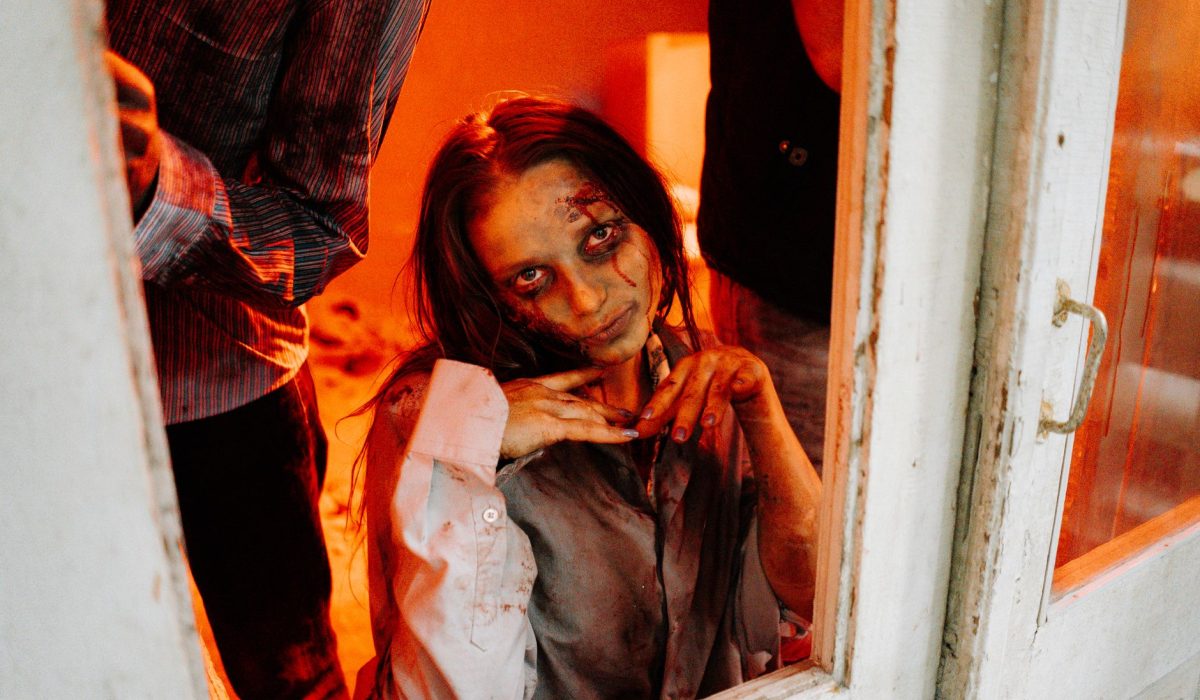
I was thirteen when a friend smuggled a VHS copy of Hellraiser into a sleepover. Two kids left the room. Gore movies have always done that: sorted audiences into the ones who stay and the ones who don’t. What’s changed is how far into the mainstream those films have traveled.
For decades the genre lived on the fringes, playing midnight slots and back-catalog rental shelves. Now a gore-heavy horror film can open on four thousand screens and pull nine figures at the box office. That shift didn’t happen overnight, and the business story behind it is almost as wild as the content itself.
Origins of Gore Movies
The practical starting point is Herschell Gordon Lewis’s Blood Feast in 1963. Sixty thousand dollars, a few gallons of stage blood, and a completely genuine disregard for good taste. Lewis called himself the “Godfather of Gore” without much argument from anyone. His films were cheap, ugly, and deliberately transgressive, designed for drive-in circuits that needed something audiences couldn’t get on television.
Italian cinema picked up the thread fast. Directors like Dario Argento and Lucio Fulci built gore movies with real compositional style, which made it harder for critics to dismiss the whole category as trash. By the late 1970s you had a split: American splatter running on pure shock value, and European horror using gore as something closer to expressionism. Both lanes mattered for what came next.
Films That Defined the Genre
Any honest list of the films that shaped gore movies keeps returning to roughly the same five titles, regardless of which critic you ask.
- Blood Feast (1963) — the commercial proof that gore alone could sell tickets
- Dawn of the Dead (1978) — Tom Savini’s makeup work set a craft benchmark
- The Thing (1982) — practical effects that still hold up against anything digital
- Braindead / Dead Alive (1992) — Peter Jackson before the rings, at maximum excess
- Saw (2004) — the film that proved the genre could generate a genuine franchise
What’s interesting is the spread. Three different decades, two continents if you count Jackson’s New Zealand production, and wildly different budgets. Braindead cost somewhere around three million New Zealand dollars. The Thing cost fifteen million US and bombed on release, which is a reminder that box office at the time turned out to be a poor predictor of long-term cultural weight. The industry keeps having to relearn that.
Box Office and Trends
The commercial story of gore movies shifted once the Saw franchise proved torture-adjacent horror could sustain sequels. The original cost roughly 1.2 million dollars and earned over 100 million worldwide. That ratio got people’s attention pretty quickly. Studios that previously wouldn’t touch explicit horror started doing the math.
Comparing the 1980s to the 2020s on gore levels is genuinely tricky. Films like The Evil Dead (1981) were soaked in practical blood effects, but the violence was cartoonish almost by necessity. Modern productions tend toward a more clinical, precise kind of gore, less volume and more detail. I’d argue the 2020s version gets under your skin differently rather than more, though reasonable people disagree on that.
The 2023 highest-grossing horror film, The Nun II, pulled over 270 million globally on a roughly 38 million dollar budget. It sits in a genre neighborhood where audiences expect visceral content, and the numbers show mainstream appetite is real. The ceiling keeps moving.
Budgets and Returns
Independent gore films still run lean. The working average budget for a serious indie entry sits around five million dollars, which sounds real until you remember what practical effects actually cost. A single well-executed creature sequence can consume a third of that figure before you’ve paid for anything else.
Studios spend more but don’t always get proportionally better results. Midsommar (2019) cost about nine million and grossed around seven million theatrically, which looks like a loss until you account for streaming licensing and the cult following that built steadily after. Gore movies, more than almost any other genre, have a long tail. Theatrical numbers are often just a rough draft of the real performance.
The smarter comparison is probably risk-adjusted return. A five-million-dollar gore film earning thirty million beats a forty-million-dollar prestige horror earning sixty. Producers who work this genre regularly already know that. Distributors are catching up, slowly.
Where Gore Movies Are Heading
Streaming platforms have given the genre room to breathe without fighting for a PG-13 rating, and that changes what filmmakers are willing to try. The constraint used to be theatrical distribution. Remove it, and you get films like Barbarian (2022) reaching wide audiences without softening their nastier moments.
Practical effects are having a genuine comeback, partly as a reaction to over-CGI’d blockbusters and partly because young directors grew up on Savini and Rob Bottin and want to work that way. Good news for the genre’s texture, if not always for its budgets. I’m honestly uncertain whether newer visual effects tools will make extreme gore cheaper and more common, or just make it look worse.
What seems clear is that the distance between gore movies and mainstream cinema is shorter now than it’s ever been. Studios greenlight them, streamers promote them, and audiences seek them out without embarrassment. The genre earned that ground slowly, over about sixty years of relentless output.
FAQs
What are the most famous gore movies?
The Thing, Saw, Hellraiser, Dawn of the Dead, and Braindead are consistently cited as defining entries in the genre across different eras.
How have gore films changed over time?
1980s gore leaned on volume and practical excess; modern films tend toward precise, clinical violence with higher production values and wider theatrical distribution.
Are there any recent popular gore films?
Barbarian (2022) and Terrifier 2 (2022) both found large audiences, with Terrifier 2 earning over ten million dollars on a roughly 250,000-dollar budget.