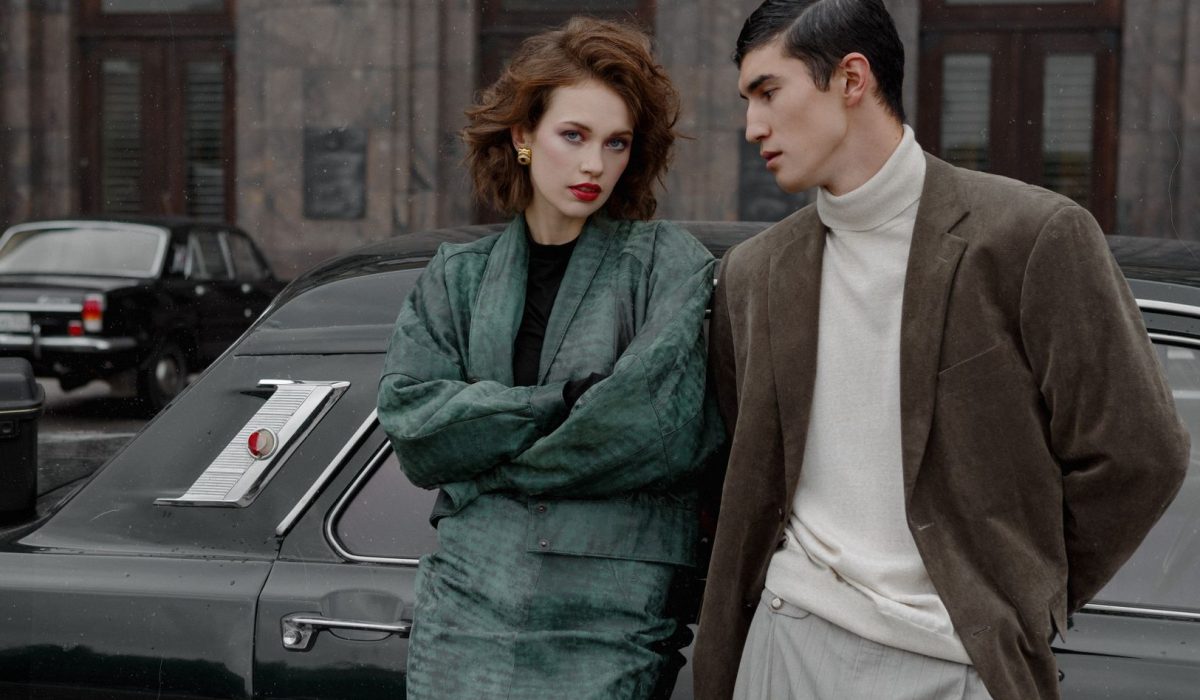
The biggest misconception about 1989 fashion is that it peaked mid-decade and was just coasting by the time that final year arrived. Not true. By 1989, the look was shifting hard, pulling away from the most cartoonish shoulder-pad excess and moving toward something leaner, more street-aware, and honestly more wearable. That transition is a big part of why so much of it is landing again right now.
I got interested in this after noticing how many pieces from that specific year kept showing up in vintage stores I browse, priced like collectibles rather than thrift fodder. A good oversized blazer from 1989 can run $60 to $120 at a decent reseller. Five years ago you’d have paid $12 and change. Something shifted in appetite, and it’s worth understanding what made 1989 so distinct in the first place.
Key Designers of 1989
Donna Karan was probably the defining voice of the year for American working women. Her “seven easy pieces” concept had been building for a while, but by 1989 it was everywhere: the bodysuit, the wrap skirt, the tailored jacket worn as a unit rather than as separates. Karl Lagerfeld’s Chanel collections leaned into quilted textures and chain hardware in a way that felt less stuffy than earlier in the decade. And then there was Azzedine Alaïa, quietly doing his body-conscious thing while everyone else went baggier.
On the sportswear side, Norma Kamali was influential in ways that rarely get enough credit. Her use of swimwear-adjacent fabrics in everyday clothes was genuinely ahead of its time. Retail prices for designer pieces ran roughly $200 to $600 for a jacket, with couture sitting anywhere from $2,000 upward. Mass-market blazers at department stores came in around $40 to $80, which is comparable to fast fashion now when you adjust for inflation.
Iconic 1989 Fashion Trends
Power dressing didn’t disappear, it just got edited. Shoulders stayed structured, but the silhouette relaxed through the hips. Stirrup pants were absolutely everywhere, paired with oversized tops and low heels or chunky boots. Acid-wash denim hit something close to its saturation point in 1989, which is probably why it feels so specifically time-stamped to that moment.
Color blocking was bolder than what you see in contemporary takes on it. Think cobalt paired with tomato red, not dusty sage and cream. Animal print crept in mostly on accessories rather than full garments. And the mini skirt made a proper return after years of longer hemlines dominating, which felt like a genuine statement at the time.
Must-Have Fashion Items
If I had to pick five pieces that define 1989 fashion as a category, these are them:
- Oversized blazer (often in plaid or houndstooth)
- Stirrup pants in a neutral or pastel
- Acid-wash denim jacket
- Bodycon bandage-style dress or skirt
- Chunky leather belt worn over a tucked-in blouse
The belt gets overlooked, but it was genuinely central to the look. Cinching an oversized top over high-waisted trousers was how people created shape without tailoring, and that specific trick is all over Instagram right now. Not a coincidence.
Cultural Influences on Fashion
1989 was a strange cultural hinge point. The Berlin Wall came down in November, and that political electricity was already visible in fashion months earlier through military-adjacent details: epaulettes, hardware, structured collars. Hip-hop’s visual language was starting to push into mainstream style in a real way, bringing logomania and athletic silhouettes with it. Those two currents, power-dressing formality and streetwear looseness, existed in genuine tension all year.
MTV was still the dominant visual medium for style, and what Madonna wore in a video would be in mall stores within six weeks. The Batman film that summer sent black surging as a dominant color choice, which sounds minor but actually shifted what people bought through fall. Pop culture and fashion had always talked to each other, but in 1989 the feedback loop was faster than it had ever been.
Celebrity Styles of 1989
Madonna is the obvious answer, and she earns it. Her look that year mixed lingerie-as-outerwear with structured tailoring in a way that confused people who wanted her to pick a lane. Princess Diana was doing something genuinely interesting too: dialing back the fussy ruffles of her early royal years and moving toward cleaner, stronger silhouettes. Her electric-blue Catherine Walker dress from that period gets referenced constantly by contemporary designers.
On the American side, Janet Jackson’s Rhythm Nation aesthetic brought militaristic black separates into the conversation for younger women who weren’t buying Donna Karan. Whitney Houston, performing in powerfully tailored gowns with real architectural shoulder work, showed that power-dressing could carry emotional weight in a performance context, not just a boardroom one.
1989 Fashion’s Modern Revival
The revival of 1989 fashion isn’t happening because of nostalgia alone. Oversized blazers work for office-optional hybrid schedules, stirrup pants photograph well, and chunky belts add shape without requiring anything to fit perfectly. These are practical reasons, and practical reasons tend to drive what actually sells rather than what just gets discussed.
Vintage platforms like Depop and Etsy have made it easier to source actual 1989 pieces rather than contemporary reproductions, which matters to buyers who care about authenticity. From what I’ve seen, acid-wash denim especially sells fast when it surfaces in good condition. Contemporary designers including Balenciaga and Bottega Veneta have pulled directly from this well in recent collections, so the reference sits in the high-end conversation too, not just thrift-flip culture.
FAQs
What were the top fashion trends in 1989?
Stirrup pants, oversized blazers, acid-wash denim, bodycon skirts, and bold color blocking defined the year, alongside a strong return of the mini skirt after years of longer hemlines.
Who were the key designers in 1989?
Donna Karan, Karl Lagerfeld, Azzedine Alaïa, and Norma Kamali were among the most influential designers shaping both runway and ready-to-wear that year.
How has 1989 fashion influenced today’s styles?
Oversized blazers, belt-cinching, and athletic-meets-tailored silhouettes all trace back to 1989 and appear regularly in current collections from Balenciaga, Bottega Veneta, and fast-fashion brands alike.