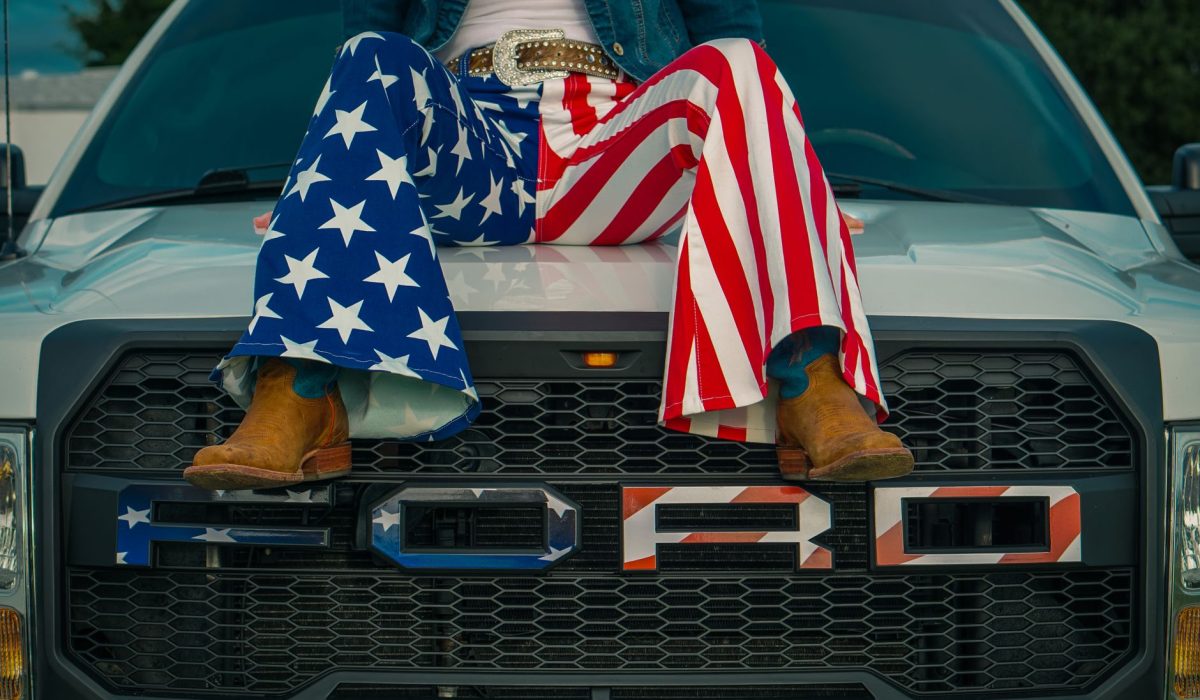
Americana fashion is, at its core, a canon of workwear and sportswear silhouettes born in the United States, nearly forgotten here, then meticulously preserved overseas before being shipped back as premium goods. That reversal is the whole story. Most people assume the style is about flag imagery or country music aesthetics, but the actual wardrobe is pretty specific: straight-leg denim, duck canvas chore coats, leather work boots, Oxford button-downs, and varsity knitwear. Patriotism is optional.
The global vintage americana fashion market is now valued at over $4 billion annually, a number that genuinely surprised me when I first came across it. That figure covers resale, reproduction, and heritage-brand new product. It tells you this isn’t a niche anymore, even if it feels like one when you’re hunting for a decent pair of raw denim in a typical mall.
What Americana Fashion Actually Is
The style draws from two distinct American traditions: rural workwear (denim, canvas, leather) and Ivy League sportswear (chinos, loafers, crewneck sweaters). Neither was originally fashionable. Levi Strauss patented the riveted denim trouser in 1873 as a tool for miners and laborers, and the Ivy League look was just what New England college students wore to class. Nobody was making a style statement.
Post-war prosperity made both traditions feel nostalgic by the 1970s, and by the time American manufacturers noticed, Japanese buyers had already started collecting the originals and reverse-engineering the construction. Ralph Lauren founded Polo in 1967 and was one of the first American designers to frame workwear and prep as a unified aesthetic, though even he was largely selling a romanticized version of a past that had moved on.
Today the category sits somewhere between heritage menswear and vintage collecting. It overlaps with workwear, prep, and trad, but the throughline is always authenticity of construction: selvedge denim, welt-stitched boots, natural fibers.
Key Garments and Their Origins
Six pieces define the wardrobe, and knowing where they came from helps you spend money more sensibly.
- Levi’s 501 jeans (1873) — the original riveted five-pocket, still produced
- Red Wing Heritage boots — Moc Toe and Iron Ranger styles start around $340 new
- L.L.Bean Maine Hunting Shoe — Bean founded the company in 1912; the duck boot design is almost unchanged
- Oxford button-down shirt — Brooks Brothers introduced it in the 1890s for polo players
- Chore coat — French in origin but absorbed into American workwear by the early 1900s
- Varsity crewneck sweater — collegiate, wool, usually in school colors, popular from the 1930s onward
Red Wing is worth lingering on because the price confuses newcomers. Three hundred and forty dollars feels steep until you account for the Goodyear welt construction, which means a cobbler can resole them indefinitely. I’ve seen pairs with fifteen years of wear that look better than new, mostly because the leather has developed a patina that factory-distressed boots simply can’t fake.
Japan’s Role in Preserving the Style
Japan’s influence on americana fashion is hard to overstate. In 1965, a Japanese photographer named Teruyoshi Hayashida produced a photobook called “Take Ivy,” documenting how students at Yale, Harvard, and other Ivy League schools actually dressed. The book was published in Japan and became enormously influential there. American publishers didn’t release an English edition until 2010, which tells you something about who was paying attention.
Japanese collectors started buying original American workwear through vintage dealers in the 1970s and 80s. When supply ran short, manufacturers like Oni Denim, Samurai Jeans, and Warehouse Co. began reproducing garments using period-correct methods, including shuttle looms that produce selvedge denim with a tighter weave and a slightly irregular texture. The Japanese selvedge denim market is now worth roughly $1 billion annually, reflecting both domestic consumption and the export premium those fabrics command.
The reason Japanese reproductions often outperform American originals in construction quality comes down to obsession with process. A mill like Kurabo will run a shuttle loom at a fraction of the speed of a modern projectile loom, producing maybe 30 meters of fabric per day versus 300. That slower process creates the slightly uneven surface raw denim fans call “character.” It costs more to do it that way. They do it anyway.
Building an Americana Wardrobe Today
Americana fashion rewards buying fewer things at higher quality, which sounds like convenient advice but is genuinely true here in a way it isn’t for trend-driven categories. A realistic starting budget for a foundational wardrobe runs roughly $800 to $1,200 spread across three or four pieces. That sounds like a lot until you consider that well-maintained Red Wings outlast five pairs of fashion boots.
Start with straight-leg denim. Either Levi’s 501s in raw denim (around $70 to $90 new) or a Japanese reproduction like Oni or Samurai (usually $200 to $350). The Japanese option fades more dramatically over 12 to 18 months of wear, which some people love and others find excessive. I’d suggest the Levi’s first if you’re not sure.
Add work boots with a welt construction, a heavyweight Oxford shirt in chambray or OCBD poplin, and a chore coat or canvas barn jacket. From there the wardrobe builds slowly. Vintage pieces from thrift stores or platforms like Grailed or eBay fill in well, and because the aesthetic values age, secondhand finds are often more appropriate than new ones.
One thing worth admitting: the community around this style can be exhausting. There’s a lot of gatekeeping about which selvedge edge width is correct or whether a specific lot number makes jeans authentic. Ignore most of it. The clothes work because they’re well-made and wear in nicely, not because you passed a trivia quiz.
Where the Style Sits Right Now
Americana fashion has been in slow, steady expansion since around 2015, driven partly by broader menswear interest in heritage goods and partly by younger buyers reacting against fast fashion. The $4 billion vintage market figure suggests mainstream appetite, but the aesthetic hasn’t been diluted the way streetwear has. The pieces are too slow, too labor-intensive, and too dependent on age to lend themselves to knockoffs that actually work. A chore coat from a fast-fashion retailer looks like a chore coat for about three washes.
If you’re building a wardrobe with this style as the base, you’re making a reasonably durable bet. The silhouettes are old enough that they’re not going anywhere, the brands have track records measured in decades, and the resale value on quality pieces is genuinely good. That’s a better foundation than most fashion categories offer.
FAQs
What brands are considered Americana fashion?
Core brands include Levi’s, Red Wing, L.L.Bean, Carhartt, Ralph Lauren, Brooks Brothers, and Wolverine. Japanese reproductions like Samurai Jeans and Warehouse Co. are widely accepted within the community.
Is Americana fashion the same as Western wear?
No. Western wear centers on cowboy boots, snap shirts, and rodeo influences. Americana fashion draws from Ivy League prep and industrial workwear, with almost no overlap in silhouette or cultural reference.
Why is Japanese selvedge denim so expensive?
Shuttle looms produce fabric at roughly one-tenth the speed of modern looms, and the mills are small. That slow output, combined with high-grade cotton, puts most Japanese selvedge denim between $200 and $400 per finished pair.